May 31, 2006

Loyal subject of the royal fern

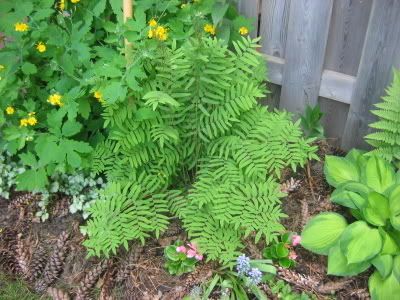
Roayl fernThe royal fern, also called the flowering fern, was new to me last year but I suspect we are beginning a long and happy relationship. No doubt you will find one growing in every shade garden I have the pleasure to put together in the future. It has such a lovely presence in the garden, even when it's being crowded by an enthusiastic neighbour. Just like Liz, she puts up with the local yokels with quiet dignity. I am going to move that neighbour over to the left to give her majesty a bit more room to spread though.

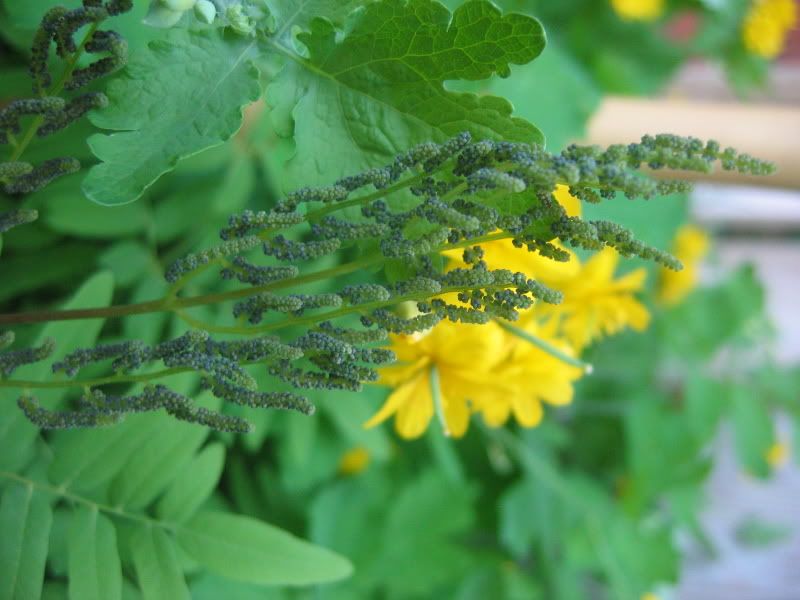
Fertile fronds on Osmonda regalisThe name "flowering fern" comes by virtue of the fact that the fertile fronds are not entirely separate, as they are in cinnamon ferns or ostrich ferns. Rather the tips of a few select fronds develop into fertile segments, making it appear almost as if the fern were flowering. Another one of the Osmundas, claytoniana, develops its fertile segment right in the middle of the frond. Hey, every good family has a nutbar or two...

Neither one of my royal ferns developed the "flowers" last year, likely because they had been moved. I'm not sure the one I transferred into a pot a little while back will produce them this season either. This is not a fern that likes to be dug up too often. On the other hand, it will tolerate more sun than most other ferns.

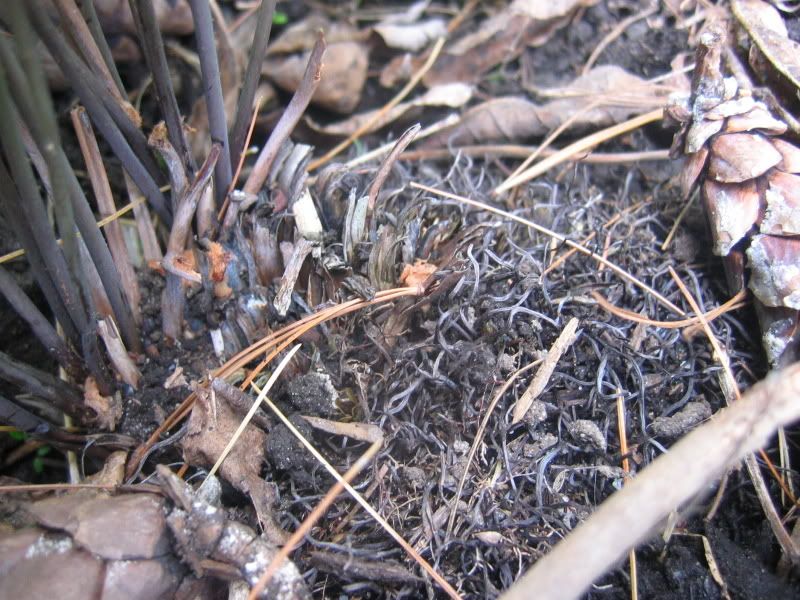
osmunda fibersAll of the Osmundas form a large fibrous mass at their base, known as the osmunda. (Wonder where they got the idea for that name?) Don't even begin to think about dividing it! Unless maybe you use a chain saw. Florists apparently use it for growing certain orchids when they want a soil-less base.

Greater celandine in full flower

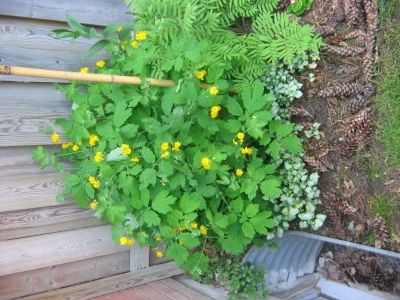
Greater celandineThis is what greater celandine looks like when the mature plant is in full flower. It will go like this until frost without faltering. The variety I have, 'Flore Pleno', is a spontaneous mutation that sports double flowers. The single-flowered variety is apparently more common.

Click on the title of this post to see the previous post on greater celandine.

May 30, 2006

Crown of thorns cactus

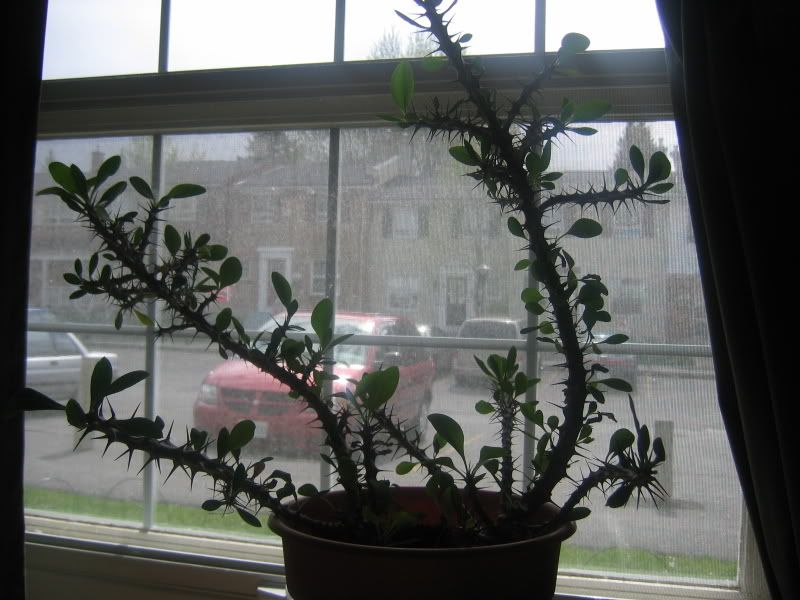
Euphorbia milliiI call this the plant only a man could love. And the fellow who originally gave me a piece of his definitely loved it. He didn't believe in pruning and it had grown into this great monstrous thing that looked like an escapee from a horror movie, with drooping, spiny branches on a plant three or four feet high and almost as wide. I would take guests around to gawk at it on his front porch in the summer, and their jaws inevitably dropped. He had grown his from a cutting his now deceased mother had given him, she in turn having received it from a neighbour who'd brought it over to North America from Vienna decades ago, so this is a plant with a lot of history.

So meet Euphorbia milii, the crown of thorns cactus. Despite the name, it was not found in Palestine two millenia ago, being a native of Madagascar. As a member of the vast and varied Euphorbia genus, it has the characteristic white sap that can irritate your skin. Seeing as you can't get up close and personal with this fellow without heavy gloves on, that rarely causes problems.

To take a cutting, I get a good grip on one of the sturdy thorns and nip off a branch with pruners or sturdy scissors. After I rinse away the white latex with water, I leave the cutting to dry for at least a couple of days so the end won't rot. Then I just stick it in potting soil (carefully!) and keep it a little on the damp side until new growth appears. It's an easy-care plant and while it prefers normal care, will get by quite nicely with a little neglect. Given enough sun and a bit of fertilizer it will produce little orangey red blooms, but for me, they are not the highlight. There are a lot of newer cultivars available with showier, more numerous blooms for which it might be worth making an effort to stimulate bloom, but I've never tried very hard.

The crown of thorns cactus will react to stress (especially when brought back inside in the autumn) by dropping some or all of its leaves, but it recovers quickly and the new growth is quite attractive, particularly if the plant has been pruned to a nice shape. I haven't been too successful in shaping this one, but in the past I've had some beauties. I tend to give them away when they get large and start over with fresh cuttings.

Mine is now occupying a strategic position in my flower bed that used to serve as a corridor for cats. "Used to" is the operative term. Felines recognize someone with larger claws and keep a respectful distance.
Squirrel protection revisited

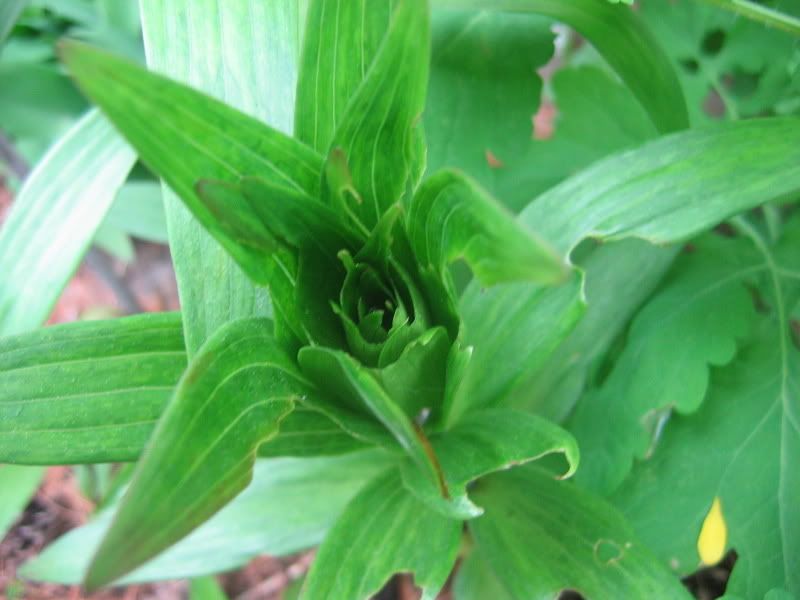
Girosa lilly damageFor the most part, my pop bottle cloches worked very well this year. They did get blown around a bit a few times, as I wasn't careful to twist all of them into the soil. Some enterprising squirrel took advantage of the temporarily uncovered state of this Girosa lily to bite a chunk out of the side. Fortunately, he missed the growing tip so the lily will still grow and flower, albeit with some pretty mangled-looking leaves. As they grow out, they will each display the same tooth marks along one side, much like the paper doll chains and snowflakes we made as children.

Conclusion, the pop bottles are worth the bother, although I should have taken more care to anchor them. One of them which couldn't be pressed into the soil better I held in place by anchoring four long twigs around it, with the curve of the twigs hugging the bottle. I obviously should have done that for this one also.

May 29, 2006

Jack Frost brunnera update

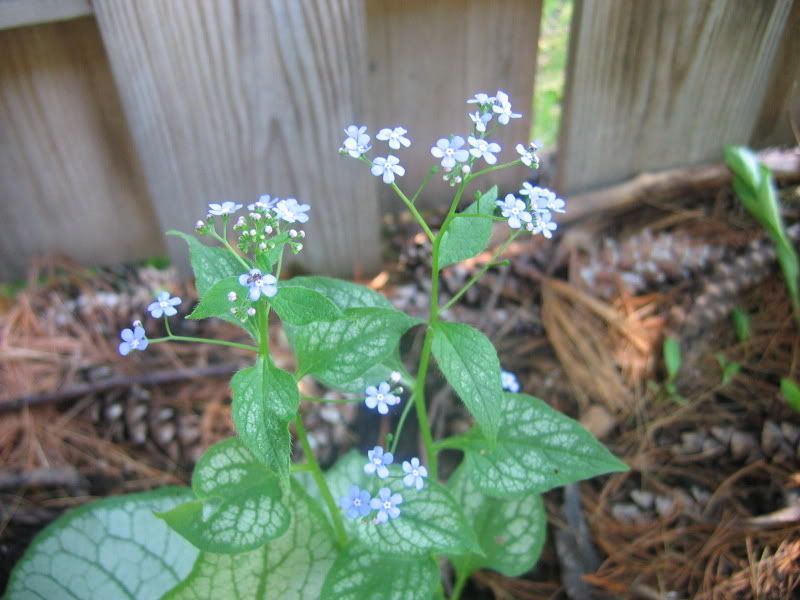
Jack Frost brunera blossomsMy Jack Frost is now in full bloom. This doesn't really qualify as "clouds of blooms" yet, seeing as this two-year old plant is just flowering for the first time, but it gives a hint of the beauty to come in future years. You can see the resemblance to forget-me-nots.

In praise of mini roses

Hit Parade mini-rose budsMini roses are another of my favourites. You get so much bang for your buck! Last year at Easter I bought a little pot of red Hit Parade roses. Later in the spring, I separated the four plants and placed them separately in the flower bed. They each grew to be bigger than the original pot of four. They are now studded with buds and preparing to explode into over the next couple of weeks. And they will bloom right through to frost. The only fertilizer they have received is composted manure and a once yearly sprinkling of Epsom salts.

I've had good experiences with Hit Parade roses before, finding them to be pest and disease free, as well as flowering very abundantly. This year I've added Orange Kordana to the mix and am hoping that they will prove to be just as successful.

May 27, 2006

Bad hair day in fern corner

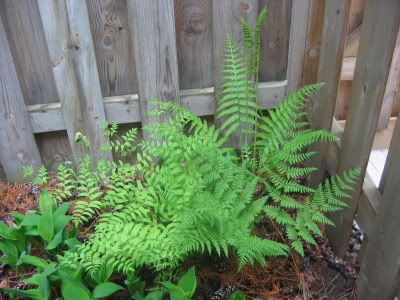
furn cornerA messy green tangle. Fortunately, that doesn't apply to my hair. It's gray enough now that I get offered senior discounts and seats on buses that I don't need or deserve. Gray is not cool but it's better than green.

What it does apply to is the former state of my "fern corner". They looked good as the emerged in the spring, showing off their coloured stems, but once fully unfurled they were a uniform green and the diversity of forms made for a tangle, not a contrast. Clearly something had to be done.

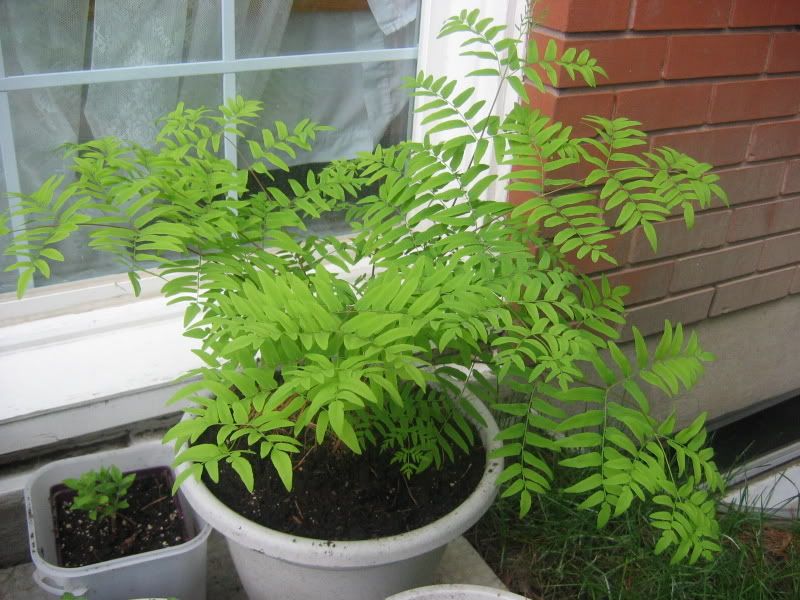
Osmunda regalisSo I dug up the fern in front - a royal fern - and seeing as I was much too fond of it to say goodbye, I throned it in a large pot. Now I can appreciate its stately presence and lacy foliage at their just merits.

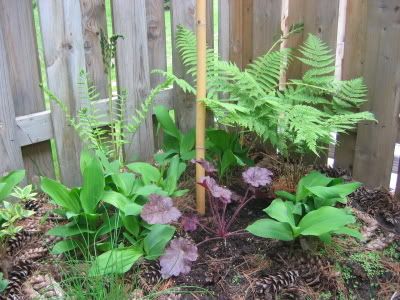
I am not an accomplished garden designer, but I do know that contrasts in colour and shape please the eye, so I looked for something that would stand out against the ferns and, at the same time, make them more noticeable. Huechera 'Sparkling Burgandy'I found what I was looking for in a Sparkling Burgundy heuchera. Its decidedly purple colour and rounded, slightly ruffled leaves could not be more different from the finely cut ferns with their tender green. Even the lilies of the valley add something, with their solid patches of green. Once this heuchera has had a year or two to settle in, this corner should be exceptionally beautiful. I'd like to find some hardy cylamens to spread at their feet or, failing that, a silver splash of spotted deadnettle could do the trick.