Showing posts with label Anemones. Show all posts

May 16, 2007

Squill and friends

When I hear the word "squill", it evokes in me images of something vaguely unpleasant, perhaps squirmy and slug-like. Fortunately, the pretty little spring flowers so named are much more pleasant to look at. They are known as good naturalizers but I do believe I'll help nature along by ordering an extra set of bulbs this fall. You can't have too many of these little beauties.

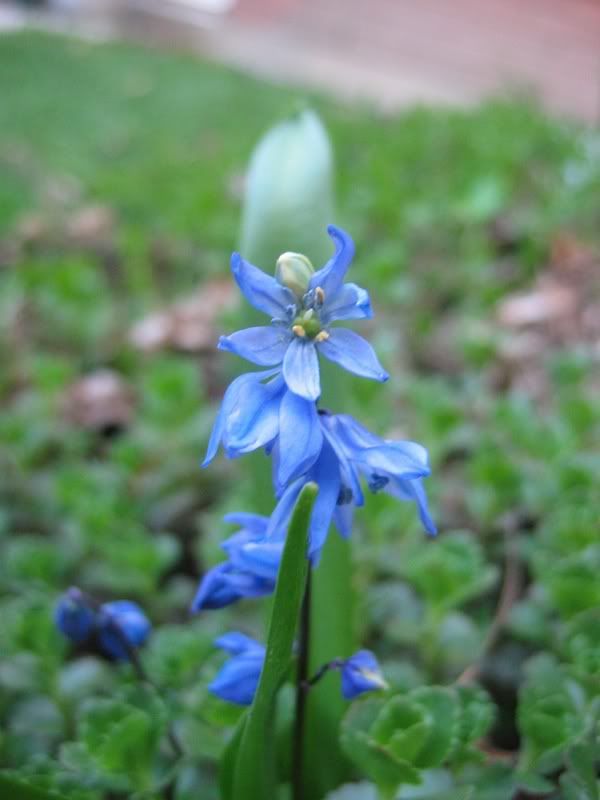
Scilla siberica
This is Siberian squill, or Scilla siberica. The vibrant blue is a welcome jolt of colour in a spring garden, and blue marries so nicely with almost any other colour that might be popping up. Some people grow these in their lawns, but I find that they are still going strong by the time the first mowing is due, so I prefer to leave them in the flower beds where they can continue unmolested.


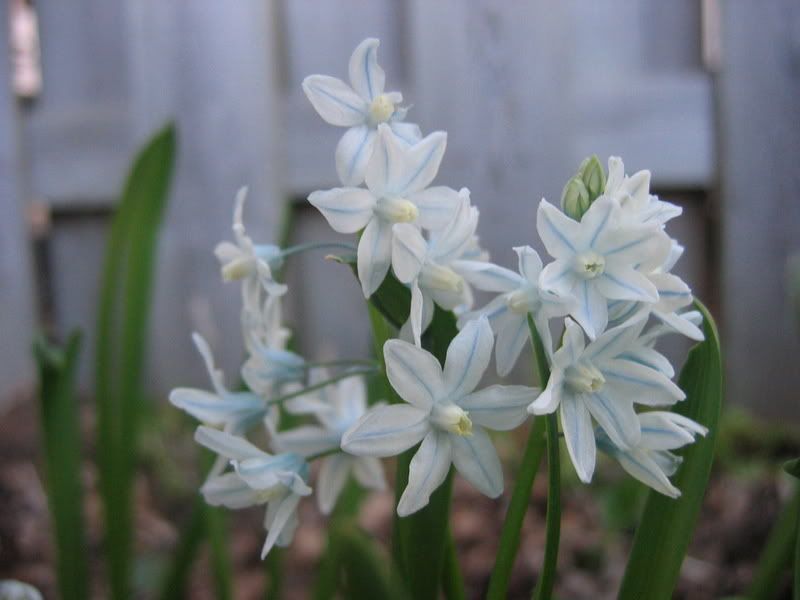
Puschkinia libanotica
Striped squill are lovely little white flowers striped with pale blue, which gives them an almost ethereal quality. They flopped over a bit in my back yard, probably from insufficient sunlight. I'll try to find them a slightly sunnier spot. Still, they were a joy.


As you may suspect, these are not the freshest of pictures. I'm running a bit behind here, and most of my squill have finished blooming especially in the front, where spring comes a bit sooner.

Some of you are wondering (those of you who actually read titles): but what about the friends? Here they are:

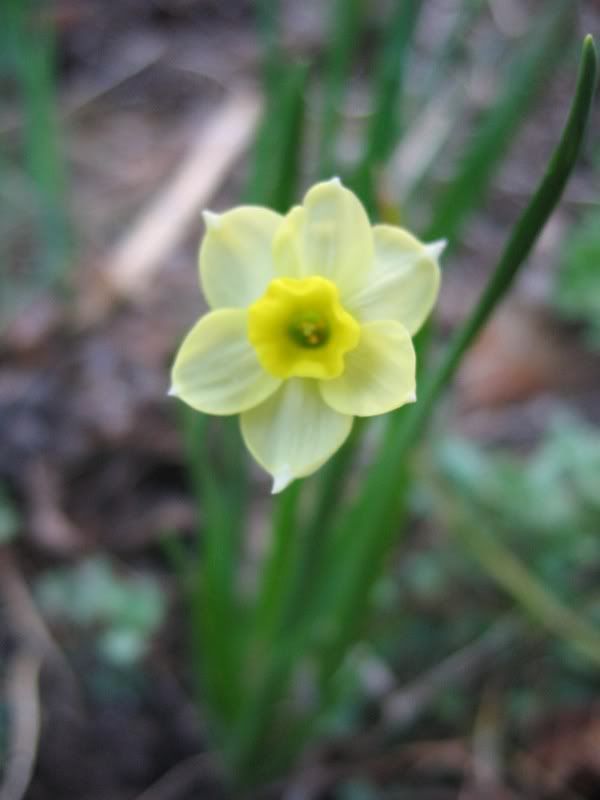
Minnow daffodils
Minnow is a mini daffodil that hasn't really captured my heart. Many of them didn't bloom for me, and I found the colour uninspiring. In a close-up, it doesn't look bad. In the garden, it looked washed out. This one is not joining my must-have list.


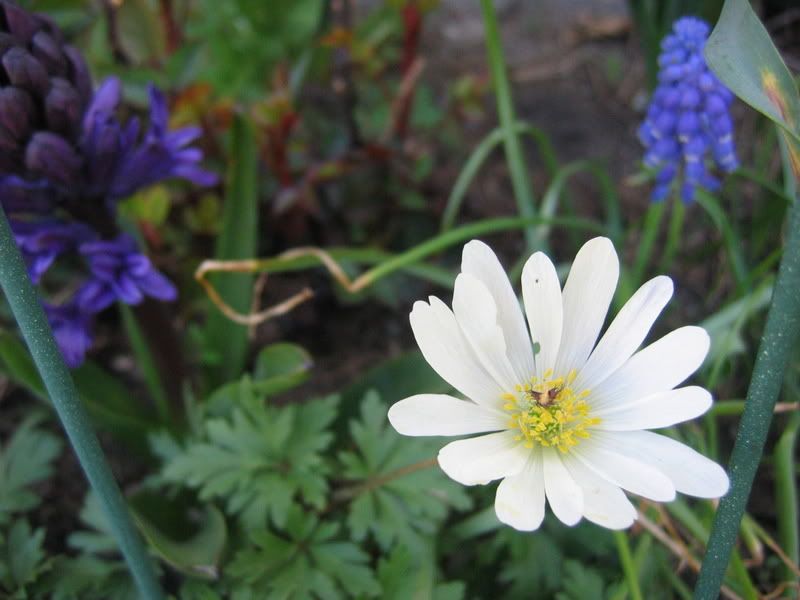
Anemone blanda
Squirrels appear to be very attracted to Anemone blanda bulbs. Last year not a single one came up. Being a bear for punishment, I tried again, and this time about half of them survived the loving attentions of the tree rodents. I love the brilliant white, especially next to the deep purple blooms of the hyacinth you can see off to the left. I do hope it succeeds in spreading.

Technorati tag: , ,

June 01, 2006

The Canadians are invading!

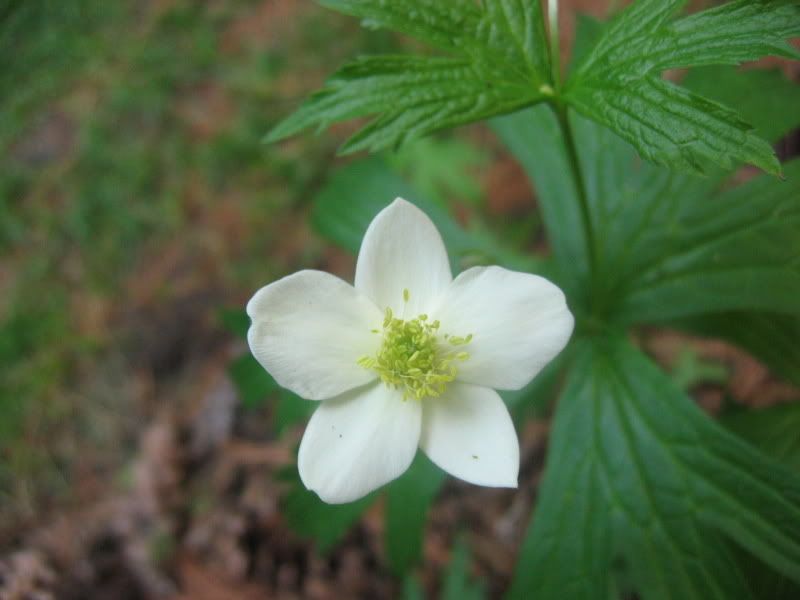
Meadow anemoneThis little beauty, Canadian anemone, showed her face yesterday for the first time in this garden. I am really in love with the pure creamy colour of her petals (technically, sepals) and could hardly wait to see her again. The picture, unfortunately, does not do her justice.

Yet meadow anemone aka Canada anemone, a native North American plant, is said to be invasive. I find that label a little excessive, seeing as it's on the endangered list in three states. It does indeed spread by rhizomes, but it takes a few years to get established and probably would not reach pest status unless it had ideal conditions.

Annemone canadensisI have always found that the first year I transplant this into my garden, it struggles mightily. This was as good as it got last year. Sometimes it dies back altogether. But the next year it comes back a little healthier and by the third or fourth it starts to spread somewhat. Of course, I have been growing it in rather heavy soil, which may be slowing it down somewhat.

Anemone canadensis is a woodland plant, despite the name "Meadow anemone" and does best in damp, humusy soil with partial or dappled shade. I have seen it carpeting several square meters in a natural setting, but it definitely hadn't taken over the whole woods. If you've grown this and consider it wannabe goutweed, please let me know. That hasn't been my experience.

May 23, 2006

All-purpose spray saves the anemone

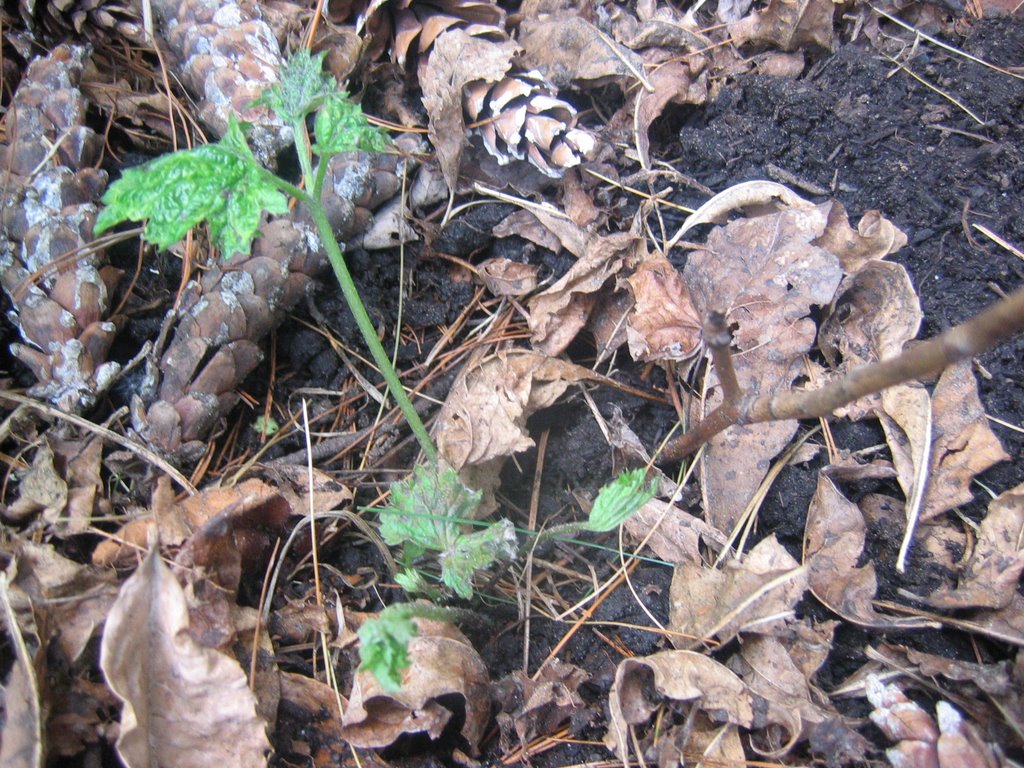
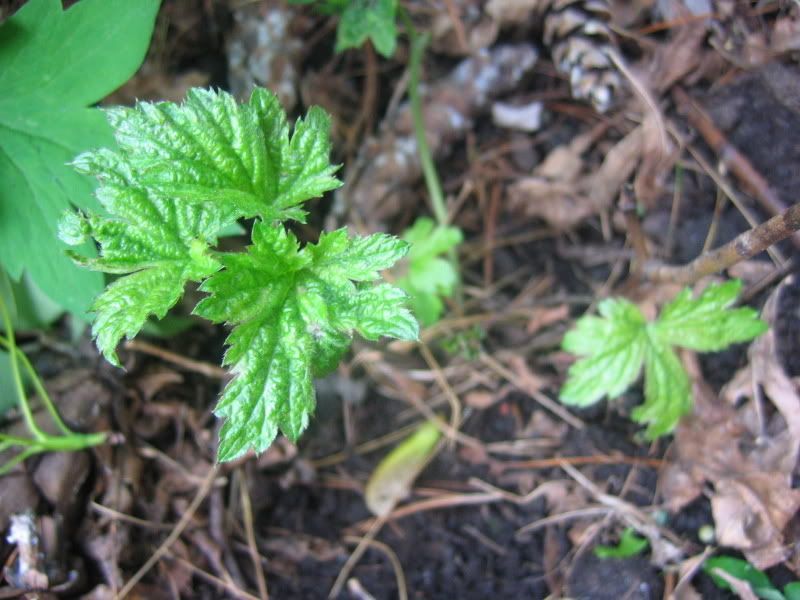
Grape leaf annemoneAnemone tomentosa 'Robustissima' is quite the name and it was largely on the strength of that name that I bought this plant. "Robustissima" means very robust and I figured that was a pretty good guarantee that I was getting a tough-as-nails plant despite its deceptively fragile-looking flowers. Well, tough as nails it may be, but even nails can rust.

As each leaf has emerged this spring, it has promptly acquired unpleasant dark colours that it is not supposed to have. It is a plant that normally appreciates a moist setting, but we have had double the normal amount of rain this month. When you combine the almost unceasing rain - how do they survive in Vancouver!? - with the heavy clayish soil that most of Ottawa is built on, this tough little plant is gasping for help.

Janet to the rescue.

Anemone tomentosumThe dark colours didn't look quite like mildew, but I figured it was probably something fungal nonetheless, given the circumstances and the fact that this same plant had healthy foliage last spring in somewhat dryer conditions. Now the cheapest, easiest way to deal with - or better yet, prevent - mildew and its ilk is with a baking soda solution. Seeing as I have both a limited number of spray bottles and with such a small garden, not enough plants to empty most of them over the season, I added the baking soda to my favorite home-made pest repellent. After picking off any leaves that looked beyond hope, I've been spraying the poor little anemone as well as an equally unhappy-looking bee balm during breaks in the rain, and they have both perked up admirably.

To make this spray, you measure 2 tbsp. (30 mL) Murphy's Oil Soap, one capful of yellow mouthwash, and 1 tsp. (5 mL) baking soda into a one litre spray bottle and top up with water. Spray on anything that is inclined to mildew, like phlox, bee balm, anemones, or anything that critters like to munch on, as rabbits and squirrels don't like the taste. Renew about once a week or after a rain.

I've also found it effective to stop tom cats from marking their territory. Before my female cat was fixed, the local toms would spray the wall by the back door till the odour was enough to make you gag. Spraying the wall with this solution broke them of the habit.

Now if you'll excuse me, it isn't raining today (yes!), and I've got plants to spray.