Licorice tea, anyone?
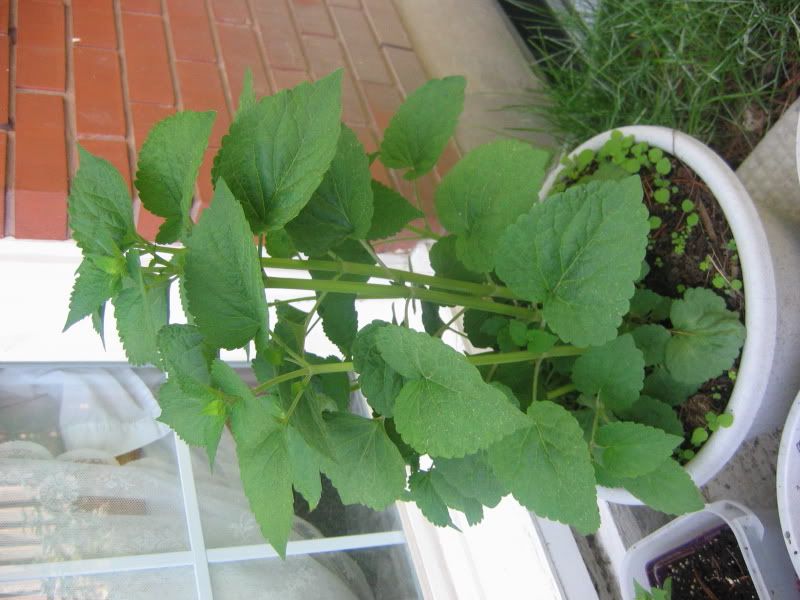
Now, anise hyssop - at least the species - is not the most beautiful of plants but there are a couple of reasons it was hard to part with, so I moved it to a pot. First, it turns into a small bush and provides some welcome mass in a new garden where almost everything is spindly. By its sheer mass, it was a focal point in the garden. Secondly, it's a highly fragrant plant that smells beautifully of licorice when you ruffle the leaves and makes a wonderful tea. Thirdly (yes, I know I said a couple, but I'm cheating) it is a great favourite of bees and I find it amusing to watch them working the spikes of purple flowers.
Unlike some other members of the mint family, it doesn't spread by runners. As you can see by the surface of the soil, it self-seeds rather generously but the seedlings don't grow very vigorously unless they're in an excellent position, so they're very easy to control.
All in all, I'd say that Agastache foeniculum is more at home in a herb garden than an ornamental border. The cultivar 'Golden Jubilee' with its yellow leaves, or the hybrid 'Blue Fortune', which looks very pretty in photos, could be a different matter.


