August 31, 2006

Sedum creeps up on you

Or at least it crept up on me. My original clump was grown from a few branches I brought home from a walk along the bike path. Someone had obviously "donated" their clump to the city because it grew only in that one spot, and it isn't exactly a native plant. The little branches got shoved unceremoniously into the flower bed using the poke and plant method. Fingers being the original all-purpose garden tool. They prospered.

I've had stonecrop in my garden for a number of years now, constantly moved around, new patches being started from a handful of cuttings. It doesn't get much easier than that. I stuffed quite a few into pots this year because I was getting a little bit tired of spending money on yet more plants, and this made for free and easy trailers.
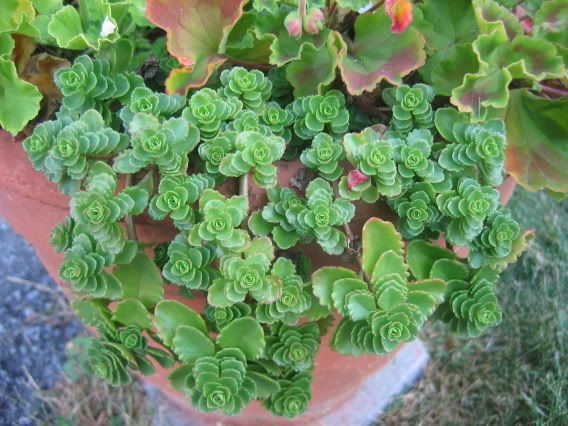
Potted creeping sedumSome even got thrown in the pot with the cannas, although I had reservations. I think of stonecrops as nice, no-care, drought-resistant plants, and I was a little afraid they'd rot out with the constant watering regime that came with the cannas. But the price was right, and I had lots more where it came from.

Now I ask you, does that look rotted out to you? No, me neither. Note to self: "drought-resistant" doesn't necessarily mean "prefers it dry". Sedum spurium is obviously delighted to take advantage of near-constant moisture, rich soil, and frequent fertilizing.

I'm hoping Pennisetum reacts the same way, because I'm thinking that next year I'd like to reuse these same sedums with fountain grass and coleus and a white geranium or two...

What would a gardener do without fantasies about next year?

Previous post on the topic of Stonecrop

Technorati tag:

August 28, 2006

Happy pot heads

I don't know about you, but looking over my potted plants around this time of year is a rather discouraging exercise. And no, I'm not going to tell you about it in detail. There's only so much battering my ego can take.

Fortunately, there is an encouraging story or two, so that's what you're going to hear today. Maybe I'll feel better afterwards...

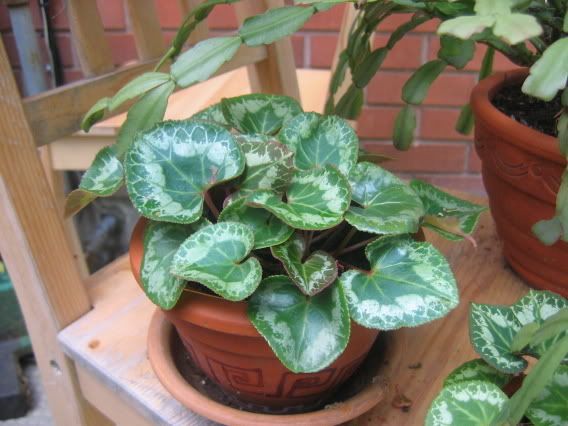
CyclamensSome of the happiest pot-dwellers I have right now are my seed-grown cyclamens. The tiny bulbs have been happily putting on weight and putting out beautifully marked foliage that earn them a spot at my place even without flowers. The ones I put in the ground have put out fewer, but larger leaves. Cyclamens are supposed to prefer cool weather and even to go dormant in hot weather, but I find they are very happy to spend the summer outside, even when it's blisteringly hot. They are also perfectly happy to sit with a puddle of water in their saucers, though all the books will tell you to pour it out. I usually do eventually, but it's only to do my bit in keeping the mosquito population down - the cyclamens thrive with wet feet.

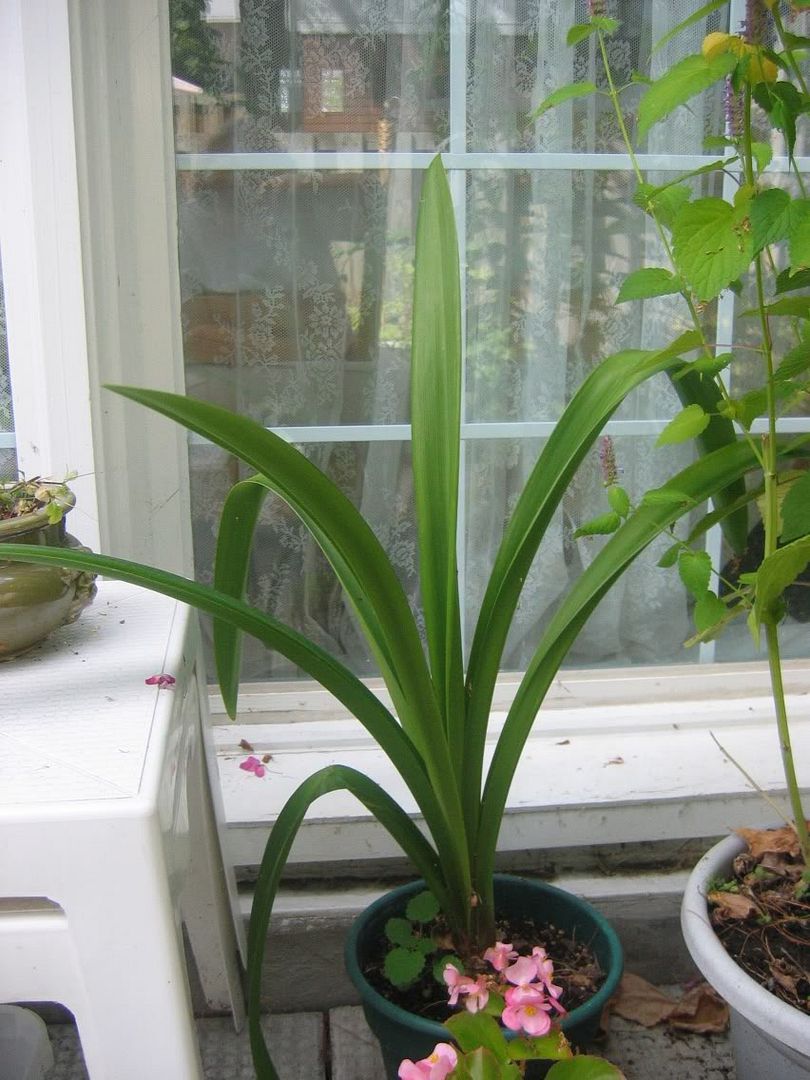
HipeastrumAnother tender bulb that thrives on a summer outside is the amaryllis aka Hippeastrum. This particular plant, which I've had for quite a few years now (about six) has survived the trauma of being separated from her daughter bulbs very nicely. The foliage grown outside tends to be much less floppy because of the greater light intensity. I haven't yet decided whether I'll force this one into dormancy soon to stimulate a Christmas blooming, or whether I'll just let it continue growing to bloom on its own schedule, some time around Easter.

Yes, folks, you heard right. You do not HAVE to make your amaryllis bulb go dormant. The only point of the dormancy is to be able to impose your schedule on the bulb, or to save the space indoors that a mature amaryllis (or several) will take up.

And yes, that is yet another self-sown anise hyssop at its feet. I let the volunteers (and there are many when it comes to this Agastache) grow a bit, then make another batch of licorice tea out of them, iced of course at this time of year.

Technorati tags: ,

Garden portraits with a difference

Going to seed is not always a bad thing. Although I tend to view deadheading as a form of recreation - the winding-down kind - sometimes I let things go a bit, either out of persnicketiness or even a genuine desire to harvest the seeds. So here is a series of garden portraits with a difference.


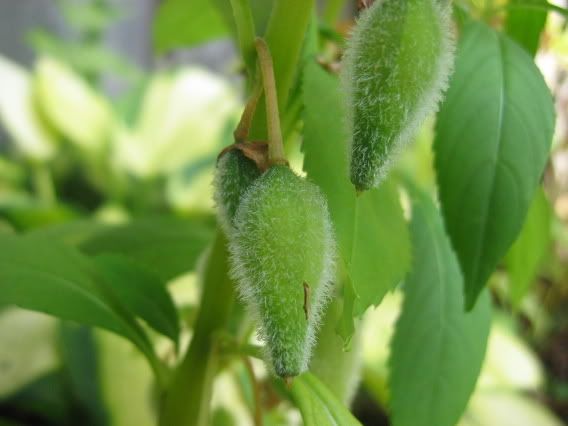
Seedpods on balsam
Impatiens balsamina has projectile seedpods, like all the impatiens family, which I suspect is how they got their name. Brush up against one of these babies when it's ripe and it will pop open, shooting the seeds quite a distance. They don't turn brown to let you know either, so the best way to find out is to squeeze them very, very gently, with your hand wrapped around to catch the flying seeds. If the seeds are brown, they're ripe. If they're still white, they're not, and you squeezed too hard. The seedpods on the more common impatiens are similar, but dark green and shiny. I find they tend to set very little seed earlier in the season, but when it starts cooling off, they grow me all kinds of little pods.


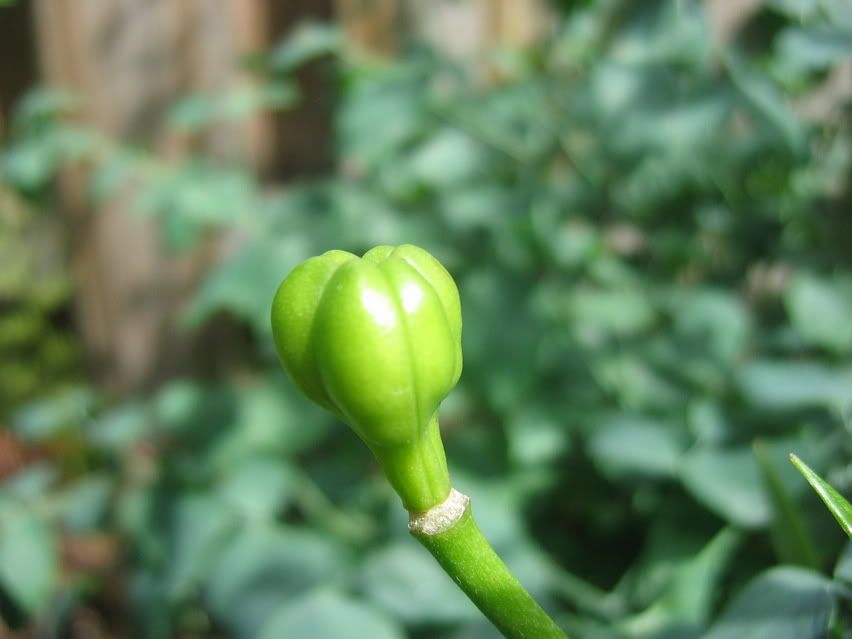
Seedpod on Lemon Pixie lily
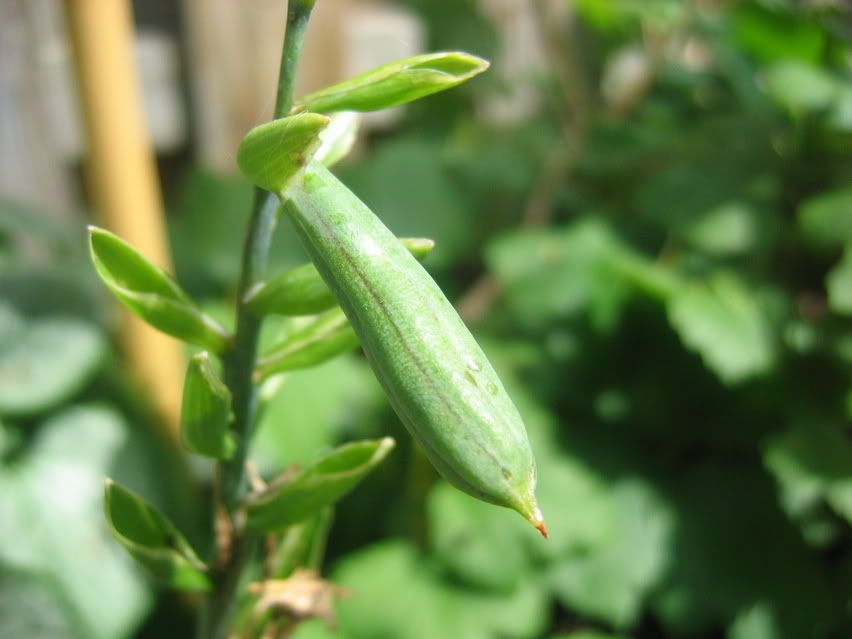
I missed deadheading a single Lemon Pixie lily earlier this year and when I noticed it, I left the seedpod there on a whim. I've never saved lily seeds before, so I don't have any experiences to share with you. I may even try to grow them just to see what I get out of it. Probably something different from Lemon Pixie, but it could be good anyway.


Thalictrum flavum seeds
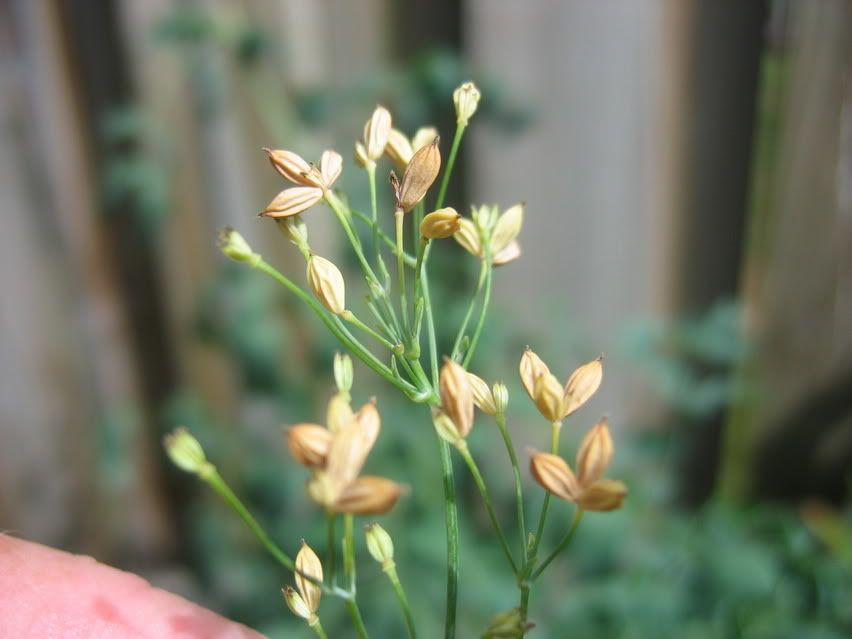
These are the seeds of yellow meadow rue.


Seedpod on Patriot hosta
A single flower on one of my Patriot hostas set seed this year. I'm letting it go out of curiosity. Again, this is a first for me.


Bulbil on Brunello lily
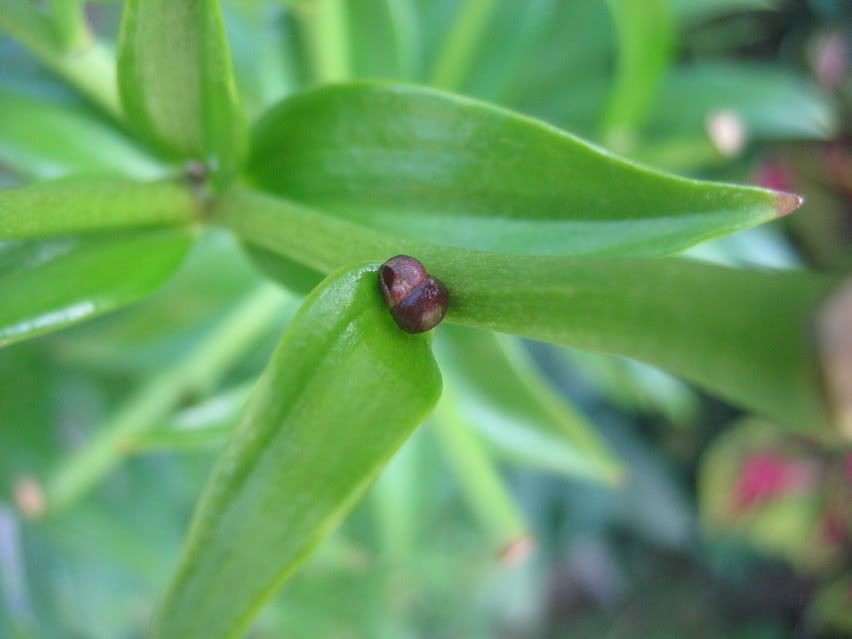
This is a bit of an oddity. When I first noticed it this morning, I thought a garden snail had crawled all the way to the top of one of my Brunello lilies. But when I took a closer look, I realized it was a bulbil, a sort of mini-bulb that grows in the leaf axils of certain lilies, especially tiger lilies. I was taken aback. I'd never heard of bulbils on an Asiatic lily before, and only one of the plants - the biggest and strongest - had produced any and even then, only two. Click on the picture for a closer view.

Previous post on the topic of Balsam, Lemon Pixie lily, Meadow rue, Brunello lilies

Technorati tags: , , , , ,

August 26, 2006

My last word on daturas

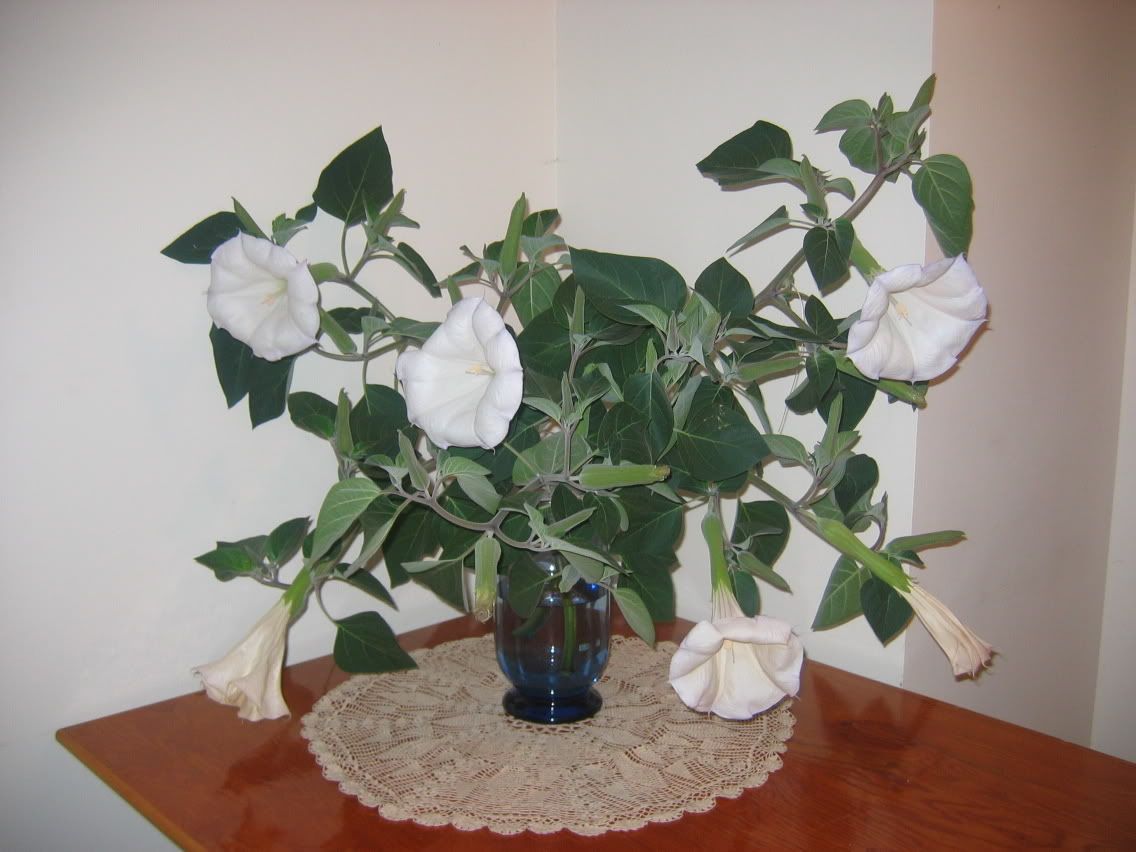
How is this for one honkin' big bouquet?

Datura inoxia bouquet
We don't normally think of daturas as cut flowers. Or at least I don't. But the winner of Survivor - Ontario has done its surviving with so much vigour that I'm obliged to whack off a couple of major branches every week or two just to get in the front door, and to give my PG hydrangea a chance of surviving. Rather than just pitching the trimmings in the compost, I throw them in my largest vase and enjoy them for a few days indoors. The smaller buds usually get dropped, but the bigger ones will proceed to open on schedule, and will normally last longer than outside, being away from the sun. (For an idea of the scale of the bouquet, each blossom is wider than my hand. The table it's on is 3 feet wide.)

The little wire fence I erected in lieu of stakes is straining severely under the weight of the plant which is now about 6 feet tall and leaning more and more toward the light. I am probably going to have to uproot it in a couple of weeks when the angle is too great. And then I will shovel prune the whole thing. I love it dearly, but I just don't have the space. In an ideal world, I'd give it a good 9 square feet in full sun (where it wouldn't lean) underplanted with spring bulbs. They wouldn't object to being smothered from July on, the late-rising datura doesn't require copious watering so the bulbs wouldn't get rotted out when they're dormant, a win/win scenario. I may yet do it in the future.

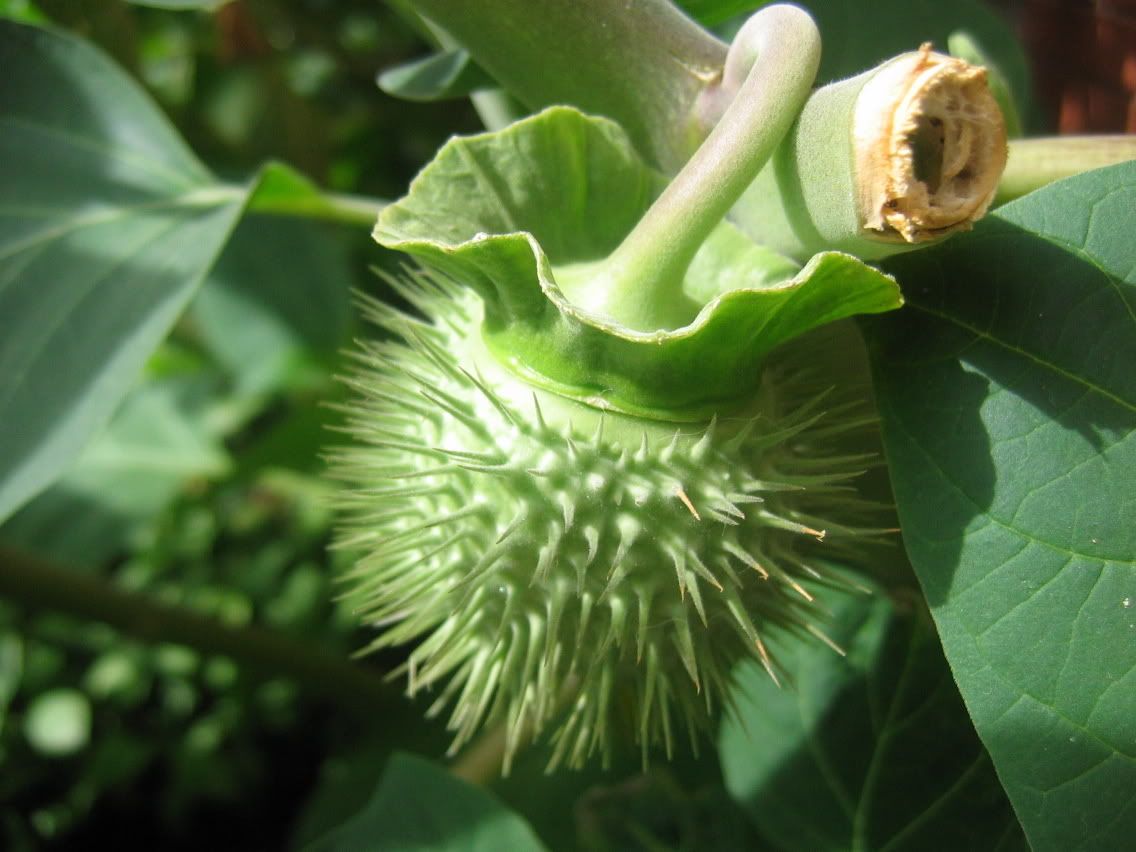
Datura meteloides seedpodIn the meanwhile, I will collect fresh seeds, even though I already have some stored, because it might be several years before I plant them again. The seedpod you see to the left is not ripe yet, but it won't look much different when it is. It will be a bit bigger, but it will split and spill the seeds without advance warning, while it is still green. There will normally be some clinging to the inside (they look like large pepper seeds) but if I want to catch more of them, I can just slip the foot from some old pantyhose over it. The thorns (which are usually too soft to cut but stiff enough to be uncomfortable) will hold it in place.

My very last word about datura is that it is indeed toxic and hallucinogenic, as you may have heard. No part of the plant is safe to ingest. But no matter what you may hear elsewhere, it is safe to handle. I do it barehanded all the time. It has to be taken internally to be dangerous. Even then, minute quantities won't have much of an effect, unlike castor bean seeds. I wouldn't keep it if I had pets or small children that liked to chew on leaves or teenagers stupid enough to want to try it for a high. Seeing as I have neither, I've grown it with no problems whatsoever.

Previous post on the topic of Daturas

Technorati tag:

August 25, 2006

Annuals that didn't work

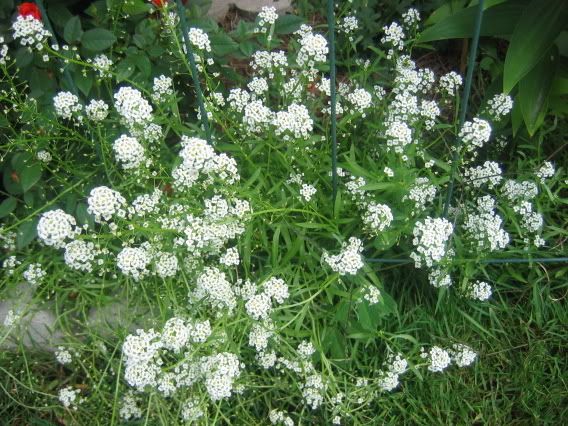
Lobularia maritimaWhile we're on the subject of how not to grow things...

I started several annuals in flats and plugs this spring, to be fillers in the flower beds. Very few of them worked. The sweet alyssum caught hold eventually, but that's about it. The poppies and California poppies both have languished, barely growing and producing sparse, tiny blooms, if any. The African laceflower (Ammi majus) has mostly disappeared, and even the balsam hasn't done too well, except for the ones I sowed directly into the flower beds.

So what did I do wrong this time?

First, I sowed too late in the season. And I sowed outside. If you want to sow outside, you should do it very early in covered flats, aka wintersowing. The poppies I sowed in cardboard tubes (a home-made equivalent to peat pots), to avoid disturbing their roots later on, but it didn't help much. They survived, but never flourished.

Second, I put them into beds where I hadn't yet solved my earwig problem. In my defence, I hadn't yet realized that's what the problem was. Be that as it may, the laceflower in particular got chewed up almost as fast as I put it in the ground.

Other than that, I honestly don't know. I could succumb to perfectionism, and feel miserable about this. But there are more important things in life to feel miserable about, so I think I'll just feel glad that, while far from perfect, my flower beds are still providing beauty to the neighbourhood and a lovely place for my morning coffee.

Which won't stop me from trying to do better next year!

Technorati tag:

August 24, 2006

How not to grow a hardy geranium

I have not been kind to my bloody cranesbill. So it has responded in kind, rewarding me with one measly blossom all year which I didn't even manage to capture on film, er, in pixels.

Well, if you can't be a good example, be a horrible warning. So here it is, your primer on how not to grow Geranium sanguineum. Album in my case, which is Latin for white, because my bloody cranesbill is white. I feel a rant coming on, but I've already done it, so I'll spare you. (The flowers in the picture are alyssum, so don't be fooled.)

Geranium sanguineum 'Album'Pack the plant in tight between larger taller plants that won't give it much of a chance. Tell yourself that the cranesbill will squeeze between the lily stalks and give them a pretty little cloud of white to emerge from. Tell yourself whatever you like. The plant isn't listening.

Plant and/or divide and/or move around your bloody cranesbill in the spring. It blooms relatively early, so this will put it off and you won't have to contend with any distracting flowers.

Let your cat -or dog - dig in close proximity to freshly transplanted specimens.

Despite having followed the preceding instructions to the letter, my bloody cranesbill is still alive and green and fresh-looking, so I haven't quite mastered the art of killing it, although I've certainly done quite well in depressing it.

I'm going to make a last attempt to grow the stuff properly. The one I moved out front will stay. It suffered mainly from being moved at the wrong time, so it will probably do fairly well with benevolent neglect. The poor crowded specimen in the back will get moved. In the fall, not the spring. Either that or I'll remove the meadow rue that's crowding it, seeing as I'm pretty unhappy with the meadow rue anyway. Sigrun has pleaded with me to leave it, so maybe I'll move it elsewhere and give it a second chance.

Previous post on the topic of Bloody cranesbill

Technorati tag: , ,

August 23, 2006

Garden portraits for August 23

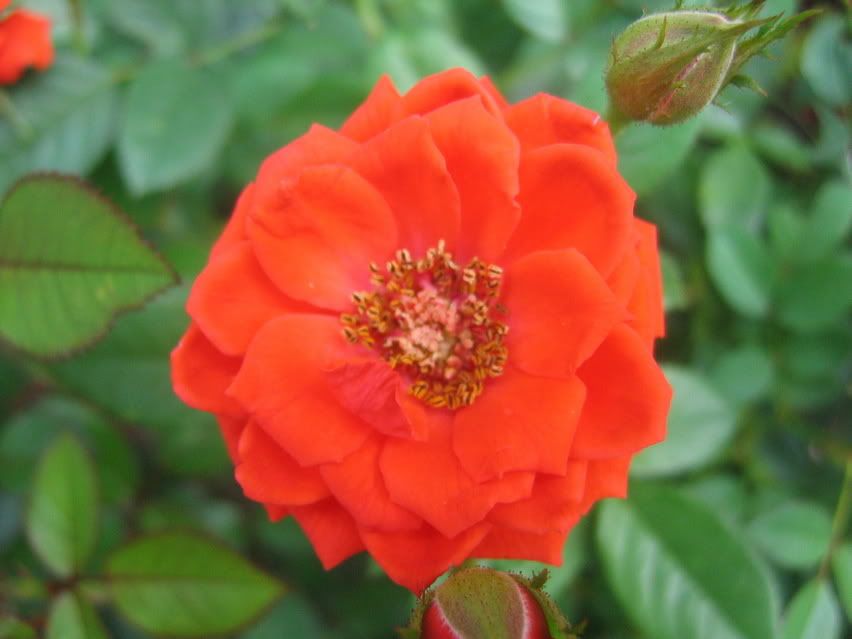
Orange Kordana bloom close up. The orange is most vivid when the flower is fresh and then fades to a more reddish colour.

Orange Kordana bloom

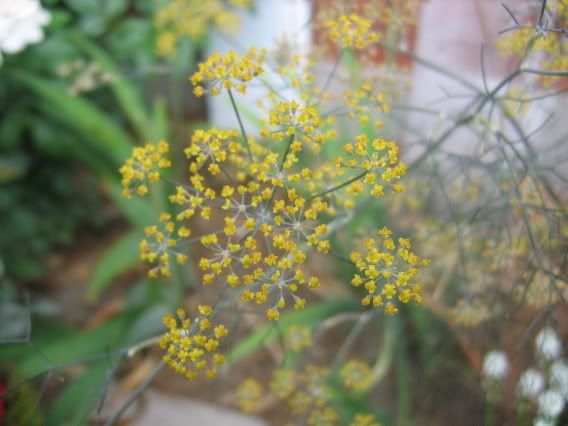
The lacy bloom of the fennel plant, beloved by bees and other pollinators.

Flower of purple fenel

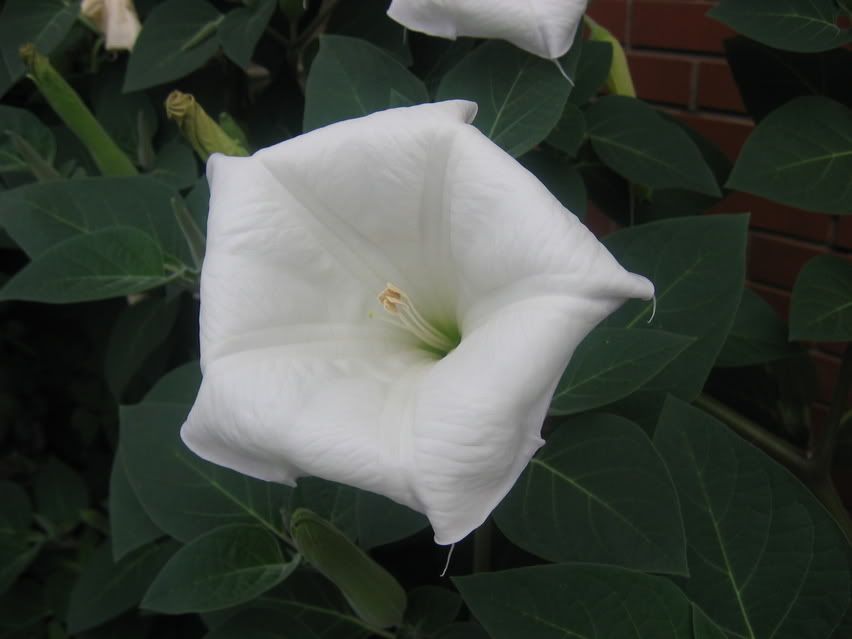
Datura blossoms open in the evening and last until the sun hits them. This one, shown in the late morning, is curling up and will soon wilt as the sun hits it.

Datura innoxia bloom

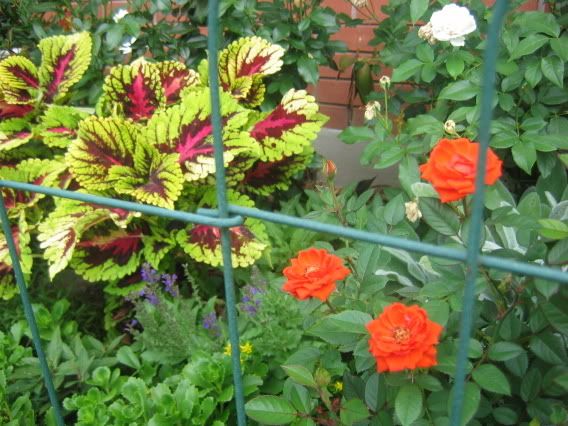
Late summer colour. That coleus has been a lifesaver!

Late summer colour

Previous post on the topic of Orange Kordana mini roses, Purple fennel, Datura, Coleus

Technorati tags: , , ,