June 06, 2006

Cinnamon fern

Cinammon fern


Cinamon fern unfurlingCinnamon fern, Osmunda cinnamomea, certainly deserves its name! The fertile fronds look like they are made of ground cinnamon, adding a welcome touch of spice to a green, shady spot.

Like the other osmunda in my garden, the royal fern, the cinnamon fern develops a tough fibrous root ball that is clearly visible and makes it easy to identify. It is said to spread by rhizomes, but I certainly haven't seen any evidence of this yet. It definitely is not in the same league as ostrich ferns, which spread to the point of being invasive.

A rather strange thing happened with one of mine this year. The fertile fronds on both my cinnamon ferns, which are side by side, emerged during a prolonged period of cool, rainy weather (twice as much rain as normal), one slightly sooner than another. Osmunda cinamomeaUnder normal circumstances my fern corner does get a couple of hours of midday sun. When the rain finally stopped, we got a brief heat wave and the browning fronds wilted immediately. They just weren't used to light that intense. On the larger of the ferns, it must have caught them at a particularly vulnerable time; they have never recovered. The other came back nicely and has had little trouble since.

If you like the elegant vase shape of ostrich ferns, but would like something that keeps to its allotted space, the cinnamon fern is a great choice.

June 05, 2006

Cyclamens can't read

Cyclamen persicum flowerWhen my kids were small, they steadfastly refused to behave the way the child-rearing books said they should. They couldn't read, and didn't know what typical behaviour was supposed to be. Much the same thing can be said about plants. They will often go along with what the experts say, but at other times will quite happily forget to conform. My cyclamen was a case in point.

First of all, it refused to be entirely happy inside in the kind of light described as ideal. You can see how the leaves are not laid out all flat and beautiful. Nonetheless it would flower unceasingly for me through the entire winter, on through spring, with only the briefest pause in summer. I got at least eleven months of bloom out of it. I would put it out in the summer in a mostly shady spot to expose it to brighter light and help the leaves to perk up. But dormancy was not on its agenda. It didn't care what the books said, it was bound and determined to go all year.

I began to think it might profit from a little persuading. Surely this year-round marathon couldn't be good for it. So I put it in a dark spot and stopped watering. In the meanwhile, I took the seeds I had recently harvested and sowed them, with excellent germination. Soon afterwards I read that growing cyclamen from seed was very tricky. Oh. Well. Fancy that. I had put my tiny pot in the butter compartment for a couple of weeks to provide a wee bit of stratification and when I brought it back to room temperature, the seedlings just popped out of the soil.

Florist's cyclamen seedlingsGood thing they did too. My cyclamen rotted in storage. Meanwhile the little seedlings grew on slowly, with the ones in the northeast windows doing the best. The one that grew the best of all was the one that sat in water most of the time, another no-no.

So now I have put them all outside, half of them directly in the flower bed, and the other half in pots. The leaves are looking much better with shorter stems and better colouring and hopefully, some of them will produce blooms for me this fall.

And I will never, ever try to force them into summer dormancy.

June 03, 2006

Morden Sunrise and Siberian iris in bloom

A couple of pictures to make up for the lack in the last posting.


Siberian iris'sSiberian irises

Getting rid of groundhogs

Persuading groundhogs (or woodchucks if you prefer), skunks and other burrowing beasties to move on is something that a lot of gardeners have to contend with. In my experience with skunks, and with the experience of numerous neighbours with groundhogs, there is a very simple, effective and rapid solution. And it's free!

Simply pour human urine around the entrance of the offender's burrow. The interloper will decide the neighbourhood has gone downhill and move to new quarters in less than 24 hours. This probably works with smaller burrowers also, but I can't speak from personal experience. Then plug up the entrance thoroughly so it won't tempt the next critter waddling through. Some stone rubble in there makes it less likely that someone else will dig it up within the week.

I just put a jar in the bathroom and ask the menfolk to fill it up. Others have been known to go the direct application route, but don't you dare go telling anybody that I recommended it! I don't want to be held responsible for the downhill slide of your reputation!

June 02, 2006

Peach Flambé got flamed

Peach Flambe huecheraI am trying to establish an orange and purple theme in my front beds. It's not working very well, but I keep trying anyway. So when one corner of the bed turned out to be shadier than expected, making some plant shuffling necessary, my thoughts turned immediately to the new heucheras. Orange foliage! I hadn't been too impressed with Amber Waves or Marmalade but the pictures of Peach Flambé were too much to resist.

The bareroot plant I put in struggled though. As the first tiny leaves emerged, they would promptly get chewed. Slug bait and nocturnal checks for earwigs didn't help and eventually, the poor thing succumbed. I was bound and determined to get my Peach Flambé, so I got a big healthy potted one, which is what you see in the picture. One way or another, I will win!

I did notice as I removed what was left of the old rootball that there was a large number of pillbugs and sowbugs in that bed. These are not normally considered a problem in the garden, but when there are too many bugs and not enough decaying plant matter for them, they will chew on living material. This bed doesn't have as much mulch on it as the others, so I'm thinking that if I put down a layer of dried leaves (I still have some left from fall) topped with aged manure and/or compost, that should give the critters something more constructive to do with their time as well as improving the quality of the soil.

It's amazing how many pest and disease problems can be solved by creating healthy soil. It's not a quick fix, of course, but the best one in the long run. In the short run, this larger heuchera has enough of a head start to hold its own. And I will have to learn to be more attentive to my bare root plants.

June 01, 2006

The Canadians are invading!

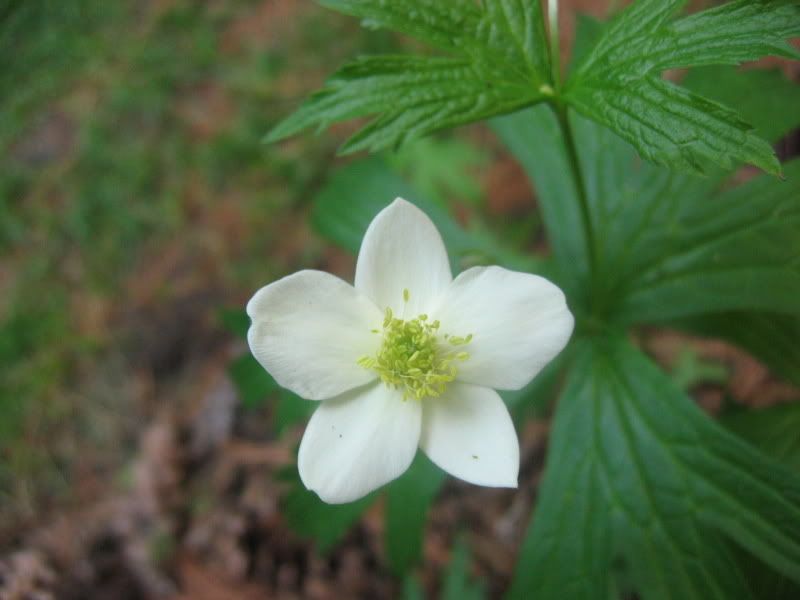
Meadow anemoneThis little beauty, Canadian anemone, showed her face yesterday for the first time in this garden. I am really in love with the pure creamy colour of her petals (technically, sepals) and could hardly wait to see her again. The picture, unfortunately, does not do her justice.

Yet meadow anemone aka Canada anemone, a native North American plant, is said to be invasive. I find that label a little excessive, seeing as it's on the endangered list in three states. It does indeed spread by rhizomes, but it takes a few years to get established and probably would not reach pest status unless it had ideal conditions.

Annemone canadensisI have always found that the first year I transplant this into my garden, it struggles mightily. This was as good as it got last year. Sometimes it dies back altogether. But the next year it comes back a little healthier and by the third or fourth it starts to spread somewhat. Of course, I have been growing it in rather heavy soil, which may be slowing it down somewhat.

Anemone canadensis is a woodland plant, despite the name "Meadow anemone" and does best in damp, humusy soil with partial or dappled shade. I have seen it carpeting several square meters in a natural setting, but it definitely hadn't taken over the whole woods. If you've grown this and consider it wannabe goutweed, please let me know. That hasn't been my experience.

Captain Kirk and crew

Captain Krik hostaI've been very happy with the performance of this hosta. The central chartreuse sections will get creamier as the season progresses.